10

Native Colonization

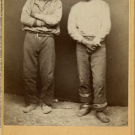
Students can continue to consider the question How did colonization work? in order to understand the concrete results of colonization in a variety of geographic contexts. Colonizers introduced new infrastructures, medicines, educational systems, and cultural norms. Print technology and more rapid transportation aided the growth of organized religion. ... Christian missionaries made use of colonial institutions and infrastructure to educate and evangelize native peoples, helping to broaden Christian presence around the world....

Cold War

This lesson plan contains multiple folders that break down the aspects of the Cold War. 

Terrorism

This inquiry set investigates the global aspects of terrorism and terrorists’ use of the internet and social media, this inquiry set addresses a wide range of terrorist groups in historical perspective and the evolution of terrorist methods of communication, recruitment, financing, and propaganda. The set uses statistics and secondary studies as sources. .

Maqualidoras in Northern Mexico

One effect of globalization has been the creation of maquiladoras, owned by transnational corporations but operating in Mexico, generally along the border with the United States. This case study of maquiladoras offers students the opportunity to analyze a complex problem that has no easy solution. Its goal is to get them to view the costs and opportunities of globalization from the perspective of Mexico as a nation and from the individual perspectives of Mexican managers, workers, and activists.

Sea Level Rises Tuvalu

How have nations struggled in similar and different ways to achieve economic, political, and social stability? Download Primary Source Set: Sea Level Rises Tuvalu

This primary and secondary source set explores the problems caused by climate change through a case study of the impact of sea level rise on the Pacific Island nation of Tuvalu. The environmental effects of rising water on Tuvalu and other small Pacific Island nations are already evident.

Cuban Missile Crisis

How was the Cold War waged all over the world? Download Primary Source Set: Cuban Missile Crisis

This set places the events of the Cuban Missile Crisis in broader historical and political perspective. It emphasizes the competition between the superpowers to influence the alignment of non-aligned nations — especially the newly independent nations of Asia, Africa, and Latin America - with financial aid and military intervention.

WWII

Through an in-depth examination of a primary source excerpt, Churchill’s Blood, Toil, Tears and Sweat:Address to Parliament on May 13th, 1940, students will identify meaningful passages of text that might bring citizens to support the entry into war. They will contextualize,analyze,and interpret the passage, then use evidence from it to answer the lesson’s overall focus question, What was Churchill’s purpose in giving this speech?

Rise of Communism & Fascism

This set examines how totalitarian leaders of the Soviet Union, Italy, Germany and Japan used propaganda as they tried to promote communism and fascism in the period between the two world wars. Students analyze examples of written and visual propaganda appealing to emotions, using symbols and evocative references, and supporting or opposing a cause.

Effects of WWI (Middle East Maps)

During World War I and at the Paris Peace Conference, Britain and France made conflicting promises to Arab and Jewish leaders and to each other about the territories of Middle East. The result was a division of the territory into mandates and the creation of nations and borders that contribute to conflict today. The texts and maps in this set support student inquiry into the creation of the modern map of the Middle East.